Saturday, April 13, 2013

Day 132 - My Stomach is Broken

Ever have one of those days when everything gets in the way of your physical activity?

I planned to run 35k today, which would be one of my longest training runs for my upcoming marathon. I feel like life is chafing at the very idea of me reaching that distance.

Last night, I hit the treadmill for a 10k run, and the tiny bit of alcohol I had sitting in my stomach caused me some of the nastiest cramps I've had in a while. At least, I thought it was the alcohol. I ended up running only 7k, and calling it quits. I came home, hydrated thoroughly (I find that pre-hydrating is key to a happy long run), and went to sleep...

...but I couldn't stay asleep. I woke up early this morning and tossed and turned for a couple of hours until I felt like it was time to give up and go for a run. I checked the weather, but Mother Nature has decided that Eastern Ontario should continue with its second winter; today is cold and wet, with the possibility of snow.

No thanks, too much variability for me. If my run in Stanley Park with Danya taught me anything, it's that I should prepare for whatever the weather threatens to throw my way. And if I am not prepared, I should run inside.

So I decided to run inside. Yeah, 35k on a treadmill is kind of insane, but I'm sort of crazy, so it fits. I rented The Perks of Being a Wallflower and downloaded a couple episodes of Grey's Anatomy to keep myself entertained and distracted.

I had a bit of Greek yoghourt and chocolate granola for breakfast. Not an extraordinary meal for me. In fact, perfectly ordinary. I also started on my first litre of water of the morning. Soon after, the churning stomach cramps started, and the bathroom and I became good friends.

So here I am, back in my pyjamas and bathrobe, chugging down Nuun and water and hoping that my stomach unbreaks itself sometime in the next couple of hours.

I'd really like to get that 35k in.

Sunday, March 24, 2013

Day 112 - Blowing It

Let me start off by wishing good luck to everyone out there running the 30k Around the Bay Road Race in the town of my birth, Hamilton, today. May your legs be strong and swift, your lungs be full of the clean (?!!) Hamilton air, and your mental game be at its best. I wish I were running with you, but I will get in my 22k today, thinking of you, and I will be cheering you on all the way.

What I want to talk about today - on glorious, sunny Day 112 - is the concept of "blowing it".

A friend of mine posted a status on Facebook the other day about eating healthily all day, only to "blow it" by gorging on some desserts in the evening.

A couple of my co-conspirators in this quest for a year of physical activity recently owned up to "blowing it" and dropping out of the challenge.

I often worry that I'm "blowing it" when I eat a treat, fail to complete a run, or plan my day poorly and end up doing only a very short burst of physical activity in the evening.

But what does "blowing it" really mean?

I think we often own up to blowing it when we worry that others will judge us on our failure to reach a goal. Maybe we feel guilty, and we need to confess. Maybe it makes us feel better about the potential for a better performance next time.

There have been times when I immediately reacted to congratulations on completing a race by saying, "Well, thanks, but I really blew it. I ended up having to walk in the middle" or "Yeah, thanks, but I blew it; I had a goal of finishing x minutes faster" or even, "Sure, but I blew it by not training well over the past few weeks". I think it helps alleviate guilt - I don't feel like I'm pulling the wool over anyone's eyes in terms of my performance - and it also helps me to feel better about what I could have accomplished had I not "blown it" - i.e., I could have finished the race without walking had I not gone out of gate too hard, or I could have finished under my goal time had I trained harder. I don't just do this with running; I've done it with synchro, with dietary changes, and even with tests and assignments at school.

But, despite my energetic use of the "blowing it" excuse, I'm not convinced that the idea of "blowing it" is a useful concept, for the following reasons:

1. When we "blow it", we make an all-or-nothing assessment of our ability to reach our goals. 

If we blow our diet on a big, yummy piece of chocolate cake, we might as well just eat the whole thing; the diet is wrecked anyway. If we blow our 10k run by having to stop and walk at 5k, we might as well just toss in the towel; we didn't manage to complete the run anyway.

If, instead, we see our minor slip-ups as an expected part of the process of getting fitter and healthier, losing weight, or reaching some other goal, we can appreciate that they are, indeed, minor. We can continue trying to reach our goals, because they are not all-or-nothing; they are, rather, ongoing struggles to create healthier lifestyles.

Last night, for example, I told myself I wouldn't drink when I went out with Danya and Emily; I just didn't feel I needed the empty calories. By the time I realised I had ordered a whiskey sour (reflex drink ordering at the bar!) it was too late to take it back. But I knew I didn't have to characterise my failure as jeopardising my whole effort to get fit, so I just drank my single drink and didn't order another.

2. When we "blow it", we pile up defeat.

My ability to stick to a goal is contingent on feeling like I can achieve minor successes regularly; I'm sure I'm not the only one. If I feel like I'm being constantly defeated, I just can't keep moving forward. The task becomes insurmountable, and there's no sense in beating my head against a brick wall, trying to achieve something that the world is telling me I'm not capable of.

If we characterise every slip-up as defeat, we can't continue motivating ourselves to achieve ambitious goals. "Blowing it", as a concept, is so sorely defeatist that it's hard to come back from; it's like piling up a mountain of defeats that we have to climb every time we make a fresh attempt at our goal. Isn't it much healthier - and more conducive to achieving big goals - if we let our slip-ups roll off our backs and focus on getting back into a productive mindset?

3. When we "blow it", we under-value of all our hard work.

If one little slip-up can undo a day's, week's, or year's worth of hard work, what is the sense of putting in that hard work, anyway? I refuse to believe that eating a dessert (or several!), having a drink, or having a bad run (or worse, no run at all!) can undo the rest of the day's, month's, or year's healthy eating and physical activity.

My hard work means something to me, and it's not something that missing a run can undo.

One of my goals for the upcoming week is to try to reframe my failures.

Can I make myself healthier, fitter, and - dare I say it? - happier by refusing to believe I've "blown it"?

Friday, March 15, 2013

Day 103 - The Chafe

The chafe. 

It burns. It itches. It makes post-run hot showers much more painful than they strictly need to be.

If you run long distance, chances are you know what I'm talking about. Not everyone gets chafing on their standard run on a crisp, clear, sunny day, but most have experienced it at least once or twice after a particularly sticky and sweaty run, or a long run in the rain. It's a hot topic on just about every beginner's running forum I've seen, and many experienced runners continue to struggle with it.

A friend of mine emailed me about a week ago asking about chafing. In particular, she wanted to know whether I had any suggestions for minimising boob chafe.

Yes folks, your boobs can get red, raw, and chapped from running.

So can your butt, your thighs, and - especially for guys, who don't have the benefit of a protective layer of sports bra between their bodies and their shirts - your nipples.

I have a particularly hard time with butt chafe on long runs. I don't know what that says about me and the delicate skin on my behind, but I do know that it is incredibly unfortunate to arrive home after a 20k run and find sitting down uncomfortable.

So what can you do to minimise chafe?

I'm no expert, and I continue to experience intermittent chafing problems, but here are some basics that have helped me out in my transition to longer distances.

What You Wear

It's been my experience that clothing can have a pretty big effect on the development of chafing, and many find that changing their running clothing can help reduce, and sometimes completely eliminate, chafe.

Your Sports Bra

Probably most relevant for the female runners in the crowd, a sports bra that doesn't fit well or is constructed poorly can cause some seriously uncomfortable hot spots, particularly on the undersides of the sisters (some call them breasts...meh) and under the straps. If you're getting sore in these areas, it's worth investing in a well-fitting high-quality sports bra that is constructed with running in mind. Usually chafe in this area is the result of a sports bra that is too big and allows a lot of rubbing and movement, so it's worth getting fitted to make sure that you are wearing the right size. As a girl with a bigger chest, I prefer to go to a specialty boutique for a fitting (Secrets From Your Sister, in Toronto, is my personal favourite) and then go from there. Once you know your size, there is a world of online and brick-and-mortar stores that cater to hard-to-fit girls, big, small, and just awkward (there are some possibilities that come highly-recommended here, here, and here. I have not yet ordered from these shops, as I really do like SFYS, so this is not a personal recommendation).
This poor guy knows all about nipple chafe.

Your Shirt

The shirt tends to be less of a problem for female runners, but male runners seem to find that wearing a cotton shirt increases nipple chafing, to the point that they may bleed (yikes!). Cotton can feel great when you first put it on, but as it gets sweaty or wet with rain, it gets heavy and can rub against your chest with force! It's well worth investing in a technical shirt with a wicking fabric, since they stay relatively dry and light even in the wettest conditions.

Your Underpants

Yep, I hear that underpants can be a source of chafe. It's not all that surprising when you consider that most underpants are cotton blend. They get heavy and rough with sweat, and can cause a lot of rub. There are some undergarments out there that are designed for running. I haven't personally run in running-specific underwear, but this will probably be the next addition to my kit. I do find that my Icebreaker Merino wool underwear is less likely to chafe than other options, but they are not cheap! It's worth noting that, in my experience, not wearing underwear does not solve the problem. Yes, I've tried. Yes, it made the situation worse.

Your Shorts

If your thighs touch, you are completely normal. 

Ever since I learned from a teenager about "thigh gap", I feel like I've got to say that any time I talk about thighs. The trouble is that if your thighs touch when you run, you can end up with a raw and chafed area on your inner thighs. Speaking from experience, this is really painful and can make walking, standing, and just existing a seemingly-insurmountable task. Incidentally, if you've ever walked 10k along the shore of Aegina in a dress, fresh out of the salty ocean, to catch a ferry, you know what I'm talking about. But that's a story for another day...

Some people find that compression shorts keep their thighs from touching enough that they can avoid chafing. This can be a good solution, and I wear compression shorts under my running shorts in hot weather. Otherwise, I find that wearing running crops or tights in a technical fabric solves the problem for me.

What You Do

Running Conditions

Most chafe seems to develop in hot, sweaty conditions or during runs in heavy rain. I suppose you could avoid running when it's hot or rainy, but where's the fun in that?

Applying Anti-Chafing Products

My behind is plastered in BodyGlide.
I'm partial to BodyGlide. It comes in a nice little deodorant-like stick, and you can swipe it onto your inner thighs or the underside of your breasts to lube your situation up and allow your skin to glide smoothly across fabrics (or other skin). It won't solve all your problems, but it does create a nice protective barrier. I also use BodyGlide on a couple of my usual foot hot spots (the side of my foot near my great toe, the underside of my pinky toe) to reduce blisters, especially when I run in new shoes.

I have also used non-petroleum jellies in the past. I hear that Un-Petroleum is good, but I've personally used Live Clean Baby Non-Petroleum Jelly. It's a little less convenient to apply than BodyGlide, and it can feel a bit wet, but it does provide a slightly better barrier when you need some more intense protection.

I know that many people use Vaseline, and I've heard it works quite well. I prefer to avoid petroleum-based products, but it all boils down to personal preference.

Bandaids or Other Plasters

Again, not as relevant for the ladies, but I hear that men who run long distances often prefer to cover their nipples with plasters for reduced nipple chafing. Sounds legit.

Losing Weight

I hate to advocate weight loss for the sake of weight loss, but I did find that my propensity to chafe significantly decreased when I lost weight. Inches off my thighs meant that they just didn't rub together the same way. Unfortunately, now my sports bra doesn't fit as well - meaning boob chafe is happening! - so it's back to the drawing board there.

So you've got the chafe...

...what do you do now?

If you've done everything you can but are still chafed and uncomfortable, you are in for a rough couple of days while things heal. In my experience, you've got to let that chafed area air out as much as possible. Light clothing (or none at all, if you are roommate-free) keeps the area dry and comfortable. Gold Bond powder can be a life saver when it comes to reducing pain and itching.

Pro tip: Do not get a chafed area waxed, no matter how much you don't want to have to shave your underarms or bikini area while on vacation in Greece. Ahem...


Happy chafe-free running, my friends.

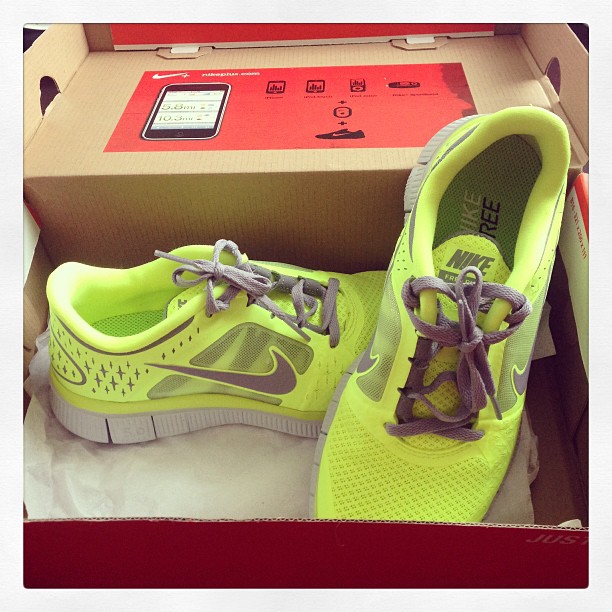
And check out my new shoes!

Sunday, March 10, 2013

Day 98 - ....and we're back!

Well, it's been a while, hasn't it?

Please don't take my lapse in blogging commitment to mean I've been similarly lax about sweating.

I've been sweating faithfully each day, but haven't been posting much (read: at all) largely because I hate my netbook's keyboard and incredibly slow speed. I realise that that a cluttered keyboard seems trivial, but I assure you that when you're feeling a little less motivated to write than usual, the cramping of your hands on a tiny set of keys is enough to quell the desire altogether. Similarly, trying to format a post on this stupid thing is enough to make you want to chuck it out the window.

Or maybe that's just me.

So where are we today? It's Day 98, and my physical activity today has consisted mostly of some pretty thorough stretching following Day 97's long training run of the week. In fact, this was a momentous run because I ran farther than I ever have, including races.

That's right, I broke the half-marathon barrier by running 22k yesterday.

Admittedly, it was done on a treadmill because I wasn't feeling equal to the Halifax chill, but I'm still pretty proud of my achievement. I didn't run fast, but I sure did run long. And that's a good thing, because a few days ago I signed up for the Limestone Race Weekend half-marathon in April. Last year I ran my first 5k at this event, so it seemed a perfect opportunity to reflect on my progress over the past twelve months. I'm sure I won't be speedy - I just don't want to finish last! - but I know I've accomplished a lot in terms of endurance and mental training. I'm looking forward to continuing to increase my distance and speed, hopefully moving up to the middle of the half-marathon pack within a few years. For now, I'm just happy that I can continue to grow as a runner and get in some good cross-training for synchro.

Speaking of cross-training, my month in Vancouver was full of fun physical activity. Some highlights:

Skiing at Cypress Mountain

Dan was my patient ski coach.
It seems like all anyone - residents, attendings, nurses, patients, homeless people as I walked down the street with my Starbucks tea - would ask about in Vancouver was whether I had had a chance to get some skiing in during my stay. I was ashamed to admit that I had never skied before.

(Well, okay, I'd been on snowblades once at Blue Mountain in Collingwood, but I'm told that doesn't count.)

So I was ecstatic when Nicolle and Lauren suited me up in some of their gear and drove Dan and I up to Cypress for some skiing. I rented a pair of skis - and, fortunately, a helmet! - and Lauren gave me a few quick tips (Don't point your skis straight down the hill. If you feel like you're going to fall, don't lean backward.). Then I was off with some patient coaching from Dan.
Never thought I'd be this excited about snow!

It was much harder than I had expected!

On my first run, I somehow managed a pretty spectacular face-plant, with poles going in different directions and one ski popping off my boot. I briefly thanked the powers that be that I had rented that helmet, and dragged myself back into a standing position. After digging snow out of my oversized pants, I gave it another shot. It went much more smoothly from there, with only a fall or two on the next several runs.

I'm so glad I got the chance to try skiing, and I suspect I'll want to do that again in the future.

Running Tour of the UBC Campus

I hadn't seen Ruth pretty much since undergrad, so when Erica told me that she was in Vancouver, I knew I had to connect up with her and see what she was up to.

Feet, feet, pawprints at Wreck Beach.
I put the 'I' in University. And obliterate the 'T'.
Busy as she is with her PhD research and rugby team, she kindly offered to take me on a running tour of the absolutely gorgeous UBC campus. We even toured down to Wreck Beach, which is apparently where a lot of people hang out without clothes on! Everyone we ran into on that dreary February day was fully clothed, and the beach itself was absolutely stunning.

Snowshoeing at Grouse Mountain

Snowshoeing's biggest challenge was staying upright.
One of the things I really wanted to do in Vancouver was the Grouse Grind.

Who knew it wouldn't be open for runners in the middle of February? Not me, apparently.

It didn't matter, though, because Christie took me up (and down) the Grouse Snowshoe Grind! We struggled to find a day that would work with my slightly crazy elective schedule, and finally settled on a Wednesday night. There are groups of snowshoers who do nighttime runs on Mondays and Wednesdays, and we joined up with the intermediate group for the trek to the top.

First surprise: Snowshoes are not big wooden racquets!

Top of Grouse Mountain with Christie
Nope, they are metal things that strap onto your running shoes and are surprisingly mobile. I struggled as we got near the end of the trek up the mountain, but stayed the course without any extra breaks, just about in the middle of the pack. We had spectacular weather; it was raining in the city, which meant fluffy white snow was falling in the mountains. By the time we reached the peak, the snow had stopped and we had a perfect view of the city.

And then we went tripping and sliding down the mountain back to where we had started. So much fun!

Running in Stanley Park

Danya and I stopped for a few photo ops.

I could write an entire entry just about my beautiful run in Stanley Park with Danya, but suffice it to say that it was a spectacular day, if a little grey and damp, as we ran our first loop around the park. Then, partway through our second, I had pulled just a bit past Danya and looked ahead only to see a massive storm rolling in. Stopping for a moment, I waited for Danya to catch up. We looked at each other and realised that we weren't going to make it around the loop before the storm hit.

Cue us turning around and running like crazy people while the sky opened up and dumped buckets of water on our heads.

Perfect excuse to stop in at the Teahouse for an extended brunch, wouldn't you agree?

I've since left Vancouver and headed to Halifax (on my travel day, I speed-walked loops around Pearson International Airport on my stop-over, with my carry-on luggage), where I've been enjoying half hour walks to work everyday (and half hour walks back, of course) as well as runs at the gym.

One more week here and I'm homeward bound!

Saturday, February 9, 2013

Days 67 and 68 - Stretch.

Day 67 was one of those days.

Know what I mean?

You gear up for a run, you've got the right music playing, the time is right, the scenery is beautiful...but your legs feel like lead pipes.

No matter how you try to make it work on a day like that, there is just no way to salvage the run. I tried giving my legs more time to warm up, I tried kicking into high gear on a hill, I turned up the music. I gave myself a mental pep-talk.

In the end, I gave up at 3.5k

In light of that, I decided to forego running yesterday, on Day 68, even though that would normally have been a marathon training day for me. My best guess about Day 67's performance is that I hadn't sufficiently recovered from my runs earlier in the week. I had been running relatively little (i.e., only doing my weekend long runs most of the time) in the few weeks leading up to my landing in Vancouver, so maybe so many runs in a row was a bit much. Instead, I extended my walks to and from work yesterday (which worked out nicely because I would have arrived at work far too early otherwise) and when I got home, I did a thorough head-to-toe stretch.

I'm going to go out on a limb here and say that I think stretching is relatively under-appreciated by athletes and weekend warriors alike. I know that it's generally the first thing I cut out of my workout schedule when I'm short on time. I'm likely to toss my stretching routine out the window if I'm tired, hungry, or in a hurry, despite the aggressive flexibility training programs I was heavily engaged in as a child and adolescent.

It's pretty telling that this stretching subreddit (you know I've got to bring reddit into almost every post), which has been around for a year, has had zero recent activity. This one boasts a single post.

Yet, despite an apparent almost-complete lack of interest in the general population, there is no dearth of research demonstrating the beneficial effects of regular stretching.

Stretching is an important component of injury prevention.

Female athletes who participate in an injury-prevention program, a crucial component of which is stretching, reduce their risk of ACL injury, a notoriously-common injury in women who take part in team sport. Increased hip and lumbar spine flexibility, gained through stretching, appears to reduce the risk of rib stress fracture in rowers. Soccer players benefit from dynamic stretching, gaining increased hip range of motion, increasing their chances of scoring and decreasing their incidence of injury during games.

The authors of this systematic review tentatively concluded that stretching interventions can reduce the incidence of workplace injury (the authors of this study agree), though they admit that research of a higher methodological calibre is needed before strong recommendations for stretching programs can be implemented. Young people in the military experience less anterior knee pain when they engage in a simple stretching program, and this finding can likely to be extended to individuals engaged in recreational sport.

Stretching can also work as part of a treatment plan for common injuries.

This guy is worried that flexibility may ruin his deadlift.
The authors of this study found that stretching and yoga were equally effective in treating notoriously-intractable chronic low back pain, and both were more effective than an instructive book on self-care. Stretching also seems to help with chronic plantar fasciitis, a painful inflammation of the bottom of the feet that affects many recreational and competitive athletes. Though more research is needed, these authors concluded that stretching may play a role in the rehabilitation of hamstring injuries.

The benefits of stretching are not just physical. 

The authors of this study found that healthy, middle-aged participants in a stretching program demonstrated improved executive function, as did participants in a cycling program. Measures of selective attention showed greater improvement for the stretching group than for the cycling group. Older adults who participated in a stretching program improved their balance, decreasing their risk of falls.

Some athletes (particularly lifters, in my experience) worry that stretching will reduce their overall performance.


In fact, the authors of this meta-analysis found no detrimental effect of static stretching on muscle performance as long as stretches weren't held longer than 60 seconds. The authors of this review came to the same conclusion; they also found that performance in certain activities (particularly low-velocity activities) improve with static stretching, and performance in a number of activities is improved by dynamic stretching.

Unfortunately, the benefits of stretching don't include a decrease in delayed onset muscle soreness, which might have something to do with how few of us are motivated to stretch regularly...

Wednesday, February 6, 2013

Day 66 - Bare Feet

66 down, 299 to go!
I promised in a prior post to review some of the literature on barefoot and minimalist running.

Barefooting is a hot topic in the running world right now. 

It wasn't long ago that Vibram's FiveFinger shoes began to gain a real foothold (see what I did there?) in the popular market. One consequence is that what used to be a relatively unknown niche in the North American running community has become accessible to neophytes and experts alike. Books like Born to Run by Christopher McDougall encourage recreational runners, either implicitly or explicitly, to doff their structured shoes in favour of FiveFingers, sandals, or even their bare soles, suggesting that the best runners run without shoes, accumulating better finishing times and fewer injuries than their more sturdily-shod peers.

Contrary to what many barefoot fanatics would have you believe, the evidence for these claims is pretty mixed.

Is barefoot always best?
This study found that running economy improved over time when shod runners transitioned to simulated barefoot running. Of course, the young men studied were given proper training in transitioning to minimalist running and were experienced runners prior to transitioning. There was no initial difference in running economy; differences developed over a 4-week habituation period. This study - though not particularly strong, as it relied on self-report - suggests that barefoot runners report fewer lower extremity injuries than their shod counterparts. The authors of this systematic review, however, found that impact attenuation (i.e., how hard (or not) you hit the ground with your feet) varied for bare feet vs. athletic shoes depending on a number of factors, including the type of shoe and the type of activity. They conclude with the supposition that different profiles of attenuation could be beneficial or harmful, depending on a wide array of activity- and form-related factors.

Some argue that foot-strike has more to do with staying injury-free than does your choice of footwear. 

Along with the surge in barefoot popularity has come the edict that "correct" form entails a forefoot or midfoot strike, and that this was probably the foot-strike that our ancestors used to run long distances and stay injury-free. This study of a traditionally barefoot population in Kenya found, to the contrary, that many of these runners adopted a heel-strike pattern when running at endurance speeds. This study of runners with self-selected foot-strike patterns showed greater shock attenuation and reported greater comforted with a rear-foot strike, which I'd argue is the most demonised striking pattern in the recreational running world at the moment.

The argument that many proponents of barefoot and minimalist shoes make is that these unstructured shoes make it nearly impossible for you to land with a potentially-damaging foot-strike. 

I'd argue that the pain that results from a poor foot-strike in an unstructured shoe might deter you from hitting the ground with a lot of damaging force, but that the shoe (or lack thereof) isn't likely to solve the entire problem if you're running with uncomfortable or damaging form.

Oh no! The dreaded heel-strike...you will become paralysed for life or excommunicated from the Church of Running.
My personal experience with shod, minimalist, and unshod running has been mixed. 

I started running in the heavily-structured Nike Moto8, and suffered some pretty annoying off-and-on knee pain, including a recurrent pes anserine bursitis that probably had its origins somewhere in a long career of eggbeater and whip kicks but seems to have been badly aggravated by running. I switched to FiveFingers and completely-unshod running (exactly what it sounds like...bare soles on the grass, dirt, or pavement), following a pretty conservative program that facilitated a slow transition from structured shoes. In noticed an immediate decrease in knee pain, but soon experienced gnawing shin splints that took weeks of rest to abate. 

Eventually, I abandoned both the naked soles of my feet and my FiveFingers, and began running full time in Nike Free Runs, which are among the less-structured shoes available at most big-box and running stores. I found a good middle ground with these shoes; I only get occasional twinges in my knees, and I don't get any shin pain. Indeed, this study supports my own belief that barefoot running and running in a minimalist shoe are not the same and do not produce the same mechanics; whether that is a good or a bad thing depends on your level of commitment to barefoot running, I suppose - for me, it seems to be a good thing.

I do notice that my arches get sore and feel worn out on mid- to long-distance runs. I have pretty (read: really) high arches and I'd suggest that the relative lack of support probably has a lot to do with that sensation. It's not unbearable, and has improved with time and training.

I also have changed and tweaked my running style. 

I have spent some time watching videos that describe so-called natural running, particularly this one, and find that they have been helpful in developing a foot strike and overall running style that feels comfortable instead of painful. I have also attended Good Form Running at Runner's Choice, and found the clinic helpful for fine-tuning aspects of my form; in particular, I learned that I needed to dorsiflex a bit more, which I think may have been at the root of my shin pain while wearing FiveFingers. Overall, I've been striving for a comfortable stride with a midfoot strike and relaxed upper body, and I think that this probably has a lot more to do with my relative lack of current injury than does wearing an unstructured shoe. I do agree that wearing a minimalist shoe has allowed me to feel my own form and the ground, and consequently better understand what my body is doing when running.

Fact: Bare foot running = dirty feet.
If you're interested in the topic of barefoot running, you might like to check out this episode of CBC's The Nature of Things, entitled The Perfect Runner, for an overview. Born to Run offers a heavily-romanticised depiction of the Tarahumara tribe and their running practices, but you won't find much in the way of unbiased evidence within its pages. As I've mentioned in a previous entry, there is a barefoot and minimalist subreddit that provide support and advice for new recreational runners and more experienced competitors alike.

Just be careful - people have jumped on the barefoot "cause" with gusto and will provide a lot of pseudo-scientific evidence to support their claims that barefoot is best. Many take exception to the notion that minimalist shoes like FiveFingers or Frees even approximate barefoot running, and feel that the only way to run "properly" is completely barefoot. If you choose to go this route, please keep safety in mind, start slowly, and choose your terrain wisely. Runners with reduced sensation in their lower limbs would be unwise to attempt barefoot running without a doctor's supervision.

Ultimately, I'm of the opinion that the only "proper" way to run is the way that feels good and keeps injuries to a minimum - and I believe that form is highly individualised and has to take into account body habitus, injury status, distance and speed run, and personal preference. Your best bet is to play around with form, attend a clinic or do, read up, and talk to other runners.

PS, did you notice that I didn't say anything about physical activity today? That's because I haven't done any yet, but I will!

Day 65 - Lowering standards for runners everywhere...

Only 300 days to go!
Today was my second day in Vancouver, and another beautiful one. If you're not bothered by rain, there's a lot to appreciate about Vancouver; it's mild and inviting, the scenery is stunning, and every once in a while, a car will stop for you mid-block just because you look like you're about to cross the street. Nice.

I collected my photo ID badge today and met Dan for an Indian buffet lunch near Vancouver General. Unfortunately, I had filled my belly with bread and hummus just a couple of hours earlier, so I didn't appreciate the vast array of vegetarian Indian food laid out before me, but I did enjoy catching up with Dan, who has been on elective in Moncton and Calgary recently.

Later, I headed "home", picking up some groceries on the way (vegetables are roasting in the oven now and giving off the loveliest smell!). I spent the afternoon reading, lazing, and napping. On waking from my late afternoon nap, I decided to head out on a rainy run, even though it is not technically a running day for me.

I soon discovered that my complete lack of directional ability is not limited to Toronto (nor to Kingston, Montreal, Hamilton, Milan, Venice, Gothenburg, Paris, London, Geneva, or the entire country of Greece...I guess I should accept at this point that my inability to navigate out of a paper bag is pretty generalised), and I immediately got lost.

Many of the houses in Vancouver seem to be built of wood, or at least covered in wood siding, which is novel for a brick-house Southern Ontarian. In the rain, the wood lets off this beautiful wet smell that reminds me of camping, and drains all sense of urgency. I was hardly troubled about being lost. In fact, it seems that I may have run by my destination (the house I'm staying at) at least once without noticing.

Lost on Nanaimo.
Of course, I also had my iPhone to point me in the right direction, so I eventually arrived safely at home after about 5k pitted with stops and starts to check Google maps, running halfway up blocks and then turning around having realised I had started off in the wrong direction, and some confused standing on street corners looking around for a familiar landmark.

The take-home message here? 

You needn't ever worry about looking silly while running, as long as I'm still on the sidewalks lowering standards.

Is that what's keeping you from trying running, anyway?

I've already posted about resources that helped me get started in running, and I also wrote a post a while back about gear that I consider essential for outdoor running in the cold, but it seems that a lot of non-runners who talk to me about running avoid it because they are afraid of looking silly.

Want to know what I think when I see runners in proper gear with good form?

Shit, they're good.

Want to know what I think when I see overweight runners in heavy cotton sweats, huffing, puffing, and shuffling, taking breaks to walk and then starting all over again?

Gratuitous selfie just because I like it. Deal.
Shit, they're impressive. They are working so hard.

Want to know what I think when I see runners in proper gear or awful sweats, with good form or bad, when they're running in the rain?

Shit, they are badass.

When they're running in the snow?

Shit, they are seriously badass.

When they're running and I'm not?

Shit, I want to be running.

Do I ever think that runners, no matter how novice, look silly?

Nope. Never.

You're allowed to not like running, and you're allowed to not want to try, but please don't let worries about people judging you, your skill, or your gear stop you from trying.