Tuesday, August 13, 2013

Day 205 - No Meat Athlete

Today my dinner was a bowl of brown rice, lentils, and black beans cooked in a mix of coconut milk and water, and topped with steamed summer squash, zucchini, and carrots fresh from my CSA farm share (I belong to Root Radical, if you're interested; google 'community shared agriculture' for CSAs in your area).

No meat.

I've been vegetarian since starting high school (that's 16 years ago, for those of you counting), and I guess you could say I've become progressively more strict as I've learned more about food production and eating well without meat. Initially, I cut out red meats as a way of testing the waters. As time went on, I decided I would rather leave fish and other seafood to someone else as well. I currently avoid gelatin, cheeses made with real rennet, and beers that use animal products like isinglass in their production (okay, okay, I just don't like beer). I continue to eat eggs and cheese sparingly, usually replace cow milk with an alternate product derived from coconut or flax, and cannot really ever get enough yoghourt.

The second most common question I'm asked when people find out I'm vegetarian is how I manage to stay energetic and active, and build muscle, on a vegetarian diet.

(The first most common question is why I choose to eat a vegetarian diet, but that's a topic for another day and a different blog. Ditto for the third most common question: Why aren't I vegan? The fourth most common question is easy to answer: No, I don't miss meat. I don't even remember what it tastes like. Nope, not even bacon.).

I'm not sure that my answer to that question is totally satisfying. I adopted a vegetarian diet as I was entering a high level of competitiveness in synchronised swimming, so I never had the option of not being healthy and energetic, and I had excellent resources available to me in the form of coaches who cared for the well-being of their athletes and were well-versed in the dietary needs of adolescent girls. By the time I reached adulthood, eating well as an active vegetarian had become second nature.

Nevertheless, here are a few scientifically-unfounded tips from me to any burgeoning vegetarian athletes out there:

1. Do your research.

I took a nutrition course in college. It didn't make me a nutritionist, but I did learn a few surprising facts. For instance, vegetarians tend to eat more nutrient dense foods than omnivores, leading to a pattern more in step with current dietary recommendations than most modern omnivorous diets. I also remember calculating my protein requirements and being surprised to find that I far exceeded my needs on most days. There are a lot of myths out there about vegetarians lacking iron and B12, but the truth is that it's not hard to get what you need if you do your research and are smart about what you're eating and how you're eating it.

2. Speak to a nutritionist.

I thought I had a pretty good handle on being a healthy vegetarian by the time I started university, but I still took advantage of free access to a nutritionist through health services at my school. I actually benefited quite a lot from recording my dietary habits and having a professional analyse them. I learned about optimising aspects of my diet, including eating iron-rich and vitamin C rich food items together to increase iron uptake. A good nutritionist can offer you great evidence-based information that can help you tailor the foods you eat to the active lifestyle you pursue.

3. Be adventurous.

The nutritionist I met with in university also helped me diversify my diet. I've come to believe that this is a really important aspect of a being a vegetarian. I've found that many friends I've seen try vegetarian diets replace meats with foods they are already familiar with, making them likely to overeat on large portions of pasta, breads, and other grain products. I've been guilty of this myself. Thing is, there are lots of countries around the world that offer interesting vegetarian cultures and cuisines, and the opportunity to try new things - and bring different proportions of micro- and macro-nutrients into your diet - are pretty much endless. I've found a sense of adventure has helped me to be a healthier vegetarian athlete, and probably a happier (and less hungry!) person.

4. Check the label.

I am always surprised to find packaged foods (and stuff you order in restaurants!) with hidden animal products, like chicken broth or gelatin. Check the label and be sure about what you're getting.

It's also important to recognise that a product that's labelled "vegetarian" or "vegan" isn't necessarily any healthier than its meat-based counterpart. In fact, a lot of prepared and pre-packaged vegetarian foods are high in empty calories, sodium, and other stuff most of us, vegetarian and non-vegetarian alike, want to limit in our daily diets. Be smart and check the label. If you haven't had much experience in reading labels, Health Canada has some resources to help you find what you're looking for. 

5. Learn to cook.

Healthier, cheaper meals are a big benefit of learning to cook and packing your own breakfasts, lunches, and dinners. There are tonnes of great resources out there for learning to cook great vegetarian fare. I find most of my recipes in places like epicurious and foodgawker, but I've heard awesome stuff about the Rebar cookbook, which is much-loved by vegetarians and omnivores alike. Fresh also offers a great series of cookbooks.

6. Access resources.

There's no shortage of vegetarian resources out there. PubMed is a great place to start searching for information about the benefits and disadvantages of vegetarian diets, for those scientifically-minded would-be vegetarian athletes. Vegetarian friends are usually more than willing to offer friendly advice about being a healthy and active vegetarian (just choose a healthy, active vegetarian friend, because there are plenty of vegetarians out there who survive on french fries and veggie burgers). Blogs like Eat and Run (by ultramarathoner and vegan Scott Jurek) and No Meat Athlete, from which I shamelessly stole this entry's title, provide great first-hand accounts, plus tips and tricks for thriving as a vegetarian or vegan athlete.

I guess what I want to stress is that it's possible to be a happy and healthy vegetarian and not find your athletic development hindered. You just need to do a little homework.

I've run two half-marathons and a marathon, competed at FINA Masters Worlds and more national-level competitions than I'd care to count, dragonboated, climbed walls, paddled canoes and kayaks, and hiked to my heart's content on a vegetarian diet. 

I have certainly failed to meet my own athletic goals from time to time, but always been due to a failure to plan, train, or prepare myself, and never because I failed to eat meat.

(I think I need to bring some pictures back to this blog...stay tuned.)

Monday, July 29, 2013

Day 190 - I'm not dead yet.

This morning, I had a dream that I had slept through my alarm and missed the first three hours of work. In my dream, I woke in a panic, scrambled to get showered and dressed, and ran to work offering profuse apologies.

I was sorely disappointed when I learned that no one had noticed I wasn't there.

That's sort of how this blog is, I think. I've been feeling incredibly guilty about my lack of attention to writing, but I suspect no one really noticed I had disappeared from the blogosphere (is that what I'm supposed to call it?).

Anyway, here I am, and I'm not dead yet.

Since I last wrote, I've run a marathon, lost ten or fifteen pounds, developed seasonal allergies for the first time, and moved all physical activity indoors until such a time as looking at a tree doesn't make me sneeze.

Better yet, I still haven't missed a day of physical activity. 

There have been a couple of really difficult days - like when I was on 24h labour and delivery call, and I had to resort to body weight work and stretching in my call room instead of sleeping. There have also been a few days when my intent to work out didn't go to plan for a number of reasons - like when I showed up for yoga with Katelyn last week and discovered that the class we had planned to attend was cancelled due to a special event, or when we tried to get to a yoga class a couple of days later and it started pouring just as the class was supposed to start. Nevertheless, I've stayed motivated and resourceful.

The benefits are starting to become obvious.

I've noticed a major change in my body composition, though the weight loss has not necessarily been commensurate with the level of change I've noticed. There's still plenty I'd like to change about my body, but I'm now comfortable in shorts and getting complimented regularly on how much better I'm looking. I'm not sure all the "better" is about weight loss or even changes in habitus - I think a lot of it is about how much better I'm feeling, and how that's become obvious in the way I carry myself. I feel a lot less like hiding in a corner these days, and that's a good thing. I also have a lot of new clothes (even if some of them are just old clothes I can wear again), and there's nothing like new clothes that fit well and feel great when it comes to building confidence.

I've also noticed that making time to work out is getting easier. Admittedly, part of the reason it's easier is that I'm not on surgery or obstetrics, but even in those settings, I was able to motivate myself to get to the gym, go for a walk, or do some basic exercises at home even after a long day. Previously, the exhaustion I'd feel at the end of a tough day would be enough to convince me to stay at home. It's getting easier every day to fight those feelings and just get to the gym. Often, staying home isn't something I even consider.

A lot of the benefits are also social. I have found that my friendships are enriched by heading to the gym, yoga studio, or pool together, and I love that aspect of this challenge. It helps that many of my friends know that I'm doing the challenge and are happy to be part of it.

Sadly, I am the only original participant still working through the challenge, but I know the other girls are still working hard at improving their fitness and well-being through physical activity.

And now it's gym time!

Saturday, May 4, 2013

Day 153 - Where the wild things are...

In the year that I've been running, I've run in rain, slush, and snow. I've run in the middle of the night, first thing in the morning and under the blazing midday sun. I've run on trails, down highways (eek!), and on quiet residential side streets. I've even run around the Acropolis in 35 degree heat.

Once, I was "followed" by a tame pack of stray dogs in Athens. 

That was mildly disconcerting, but ultimately not concerning. I have otherwise never had a problem with wildlife on my runs.

Today I set out for a 9 p.m. run through the city with the plan to head out along the water to a nearby college before swinging around back home. I planned for about 10 k.

I made it maybe half a kilometre before I was CHASED BY A RACCOON.

Yes, chased, in a way that is completely worthy of caps lock. Not only did the lumbering beast (!!) come right out of the park  toward me, it also followed me across the street at a gallop.

I probably could have achieved a personal best in the mile given the speed I beat it out of there with. I ended up doing a short (5k) run in the well-lit streets around my apartment, heart pounding more with fear than exertion.

Maybe I'll be running a little earlier in the day from now on.

Wednesday, May 1, 2013

Day 150 - Things we do for love...

...of running.

The story starts out like this:

Looking pretty fresh at the 14k mark in the Limestone Half.
I signed up for the Limestone Race Weekend Half Marathon on a whim back in February. I ran my first ever 5k last year at this very event, and I figured that running a half marathon at the same event this year would be a good way to show myself how far I'd come in a year. Something about coming full circle, blah, blah, blah.

And then it takes this turn:

The half marathon and 5k events are run on the Sunday morning of the race weekend, but there is also a Trauma 10k that is run on the Saturday evening. The Trauma 10k is run in support of the trauma program at Kingston General Hospital, and is meant to race awareness of year-round preventable causes of trauma. It is organised by a KGH nurse. Incidentally, this same KGH nurse runs our technical skills OSCE during the peri-operative/acute care rotation that I just finished.

When 10-12 of us were sitting, sequestered, waiting to start our OSCE in the simulation lab, this nurse asked who was running the Trauma 10k. She scanned the room to a disappointing response, and when she looked at me I mentioned that I was running the half instead.

A little voice - was it her? Was it a classmate? Was it the voice inside my head? - laughingly suggested I run both.

Now, I'm not totally out of touch with reality, and I know that these little voices probably should be ignored, but I thought the little voice might be onto something.

So I found myself, on Saturday evening, walking to the start line of the Trauma 10k, $45 in hand, and walking away with a bib, Larabar, and race t-shirt. I figured I would run this one slowly, since I knew I'd be running the half the next morning, a mere 13 hours after I'd finished the 10k.

As it turned out, a large group of med students were running the race. I was easily one of the slowest, with my easy pace through the hilly Kingston streets. Trust me, I'm not fast even when I'm trying to run fast.

Katelyn and I finish our first half in September.
Yet, wiping mayflies out of my eyes and spitting them out of my mouth, I managed a personal best in the 10k. My previous personal best was a rather unimpressive 1h7min at the Wolfe Island Classic in July 2012. I finished this race, without even trying for speed, at 57min, covered in sweat, mayfly carcasses, and saliva.

With that knowledge in mind, I was certain that I had sabotaged myself for the half marathon. I must have run too hard, and I would certainly not be able to pull out a personal best on Sunday morning. I acknowledged to myself that running two races within 24h was ambitious, and that I didn't need a personal best time in the half marathon to make the weekend a success.

I went out for pizza with friends and fell into bed without even laying my running gear out.

The next morning, I woke up, rolled out of bed, threw on some gear, mixed some Nuun, and ate two pieces of cold pizza. I collected my chip, lined up in the chute, and ran another personal best.

Many pounds lighter, after finishing my second half on April 28.

Yes, at 2h14min, I beat my personal best in the half-marathon

I recognise that that isn't a fast time, but it is 13 minutes faster than I'd run the same distance on a significantly flatter course in Ottawa this past September.

(Apologies to those I told I had achieved a personal best by 15 minutes; I thought my September time was 2h29min, but I checked the results of that race and found that it was actually 2h27min.)

There is no moral to this story, and there is no punchline. 

Just a moment of gloating after two personal best times in two distances in less than 24 hours.

Saturday, April 13, 2013

Day 132 - My Stomach is Broken

Ever have one of those days when everything gets in the way of your physical activity?

I planned to run 35k today, which would be one of my longest training runs for my upcoming marathon. I feel like life is chafing at the very idea of me reaching that distance.

Last night, I hit the treadmill for a 10k run, and the tiny bit of alcohol I had sitting in my stomach caused me some of the nastiest cramps I've had in a while. At least, I thought it was the alcohol. I ended up running only 7k, and calling it quits. I came home, hydrated thoroughly (I find that pre-hydrating is key to a happy long run), and went to sleep...

...but I couldn't stay asleep. I woke up early this morning and tossed and turned for a couple of hours until I felt like it was time to give up and go for a run. I checked the weather, but Mother Nature has decided that Eastern Ontario should continue with its second winter; today is cold and wet, with the possibility of snow.

No thanks, too much variability for me. If my run in Stanley Park with Danya taught me anything, it's that I should prepare for whatever the weather threatens to throw my way. And if I am not prepared, I should run inside.

So I decided to run inside. Yeah, 35k on a treadmill is kind of insane, but I'm sort of crazy, so it fits. I rented The Perks of Being a Wallflower and downloaded a couple episodes of Grey's Anatomy to keep myself entertained and distracted.

I had a bit of Greek yoghourt and chocolate granola for breakfast. Not an extraordinary meal for me. In fact, perfectly ordinary. I also started on my first litre of water of the morning. Soon after, the churning stomach cramps started, and the bathroom and I became good friends.

So here I am, back in my pyjamas and bathrobe, chugging down Nuun and water and hoping that my stomach unbreaks itself sometime in the next couple of hours.

I'd really like to get that 35k in.

Sunday, March 24, 2013

Day 112 - Blowing It

Let me start off by wishing good luck to everyone out there running the 30k Around the Bay Road Race in the town of my birth, Hamilton, today. May your legs be strong and swift, your lungs be full of the clean (?!!) Hamilton air, and your mental game be at its best. I wish I were running with you, but I will get in my 22k today, thinking of you, and I will be cheering you on all the way.

What I want to talk about today - on glorious, sunny Day 112 - is the concept of "blowing it".

A friend of mine posted a status on Facebook the other day about eating healthily all day, only to "blow it" by gorging on some desserts in the evening.

A couple of my co-conspirators in this quest for a year of physical activity recently owned up to "blowing it" and dropping out of the challenge.

I often worry that I'm "blowing it" when I eat a treat, fail to complete a run, or plan my day poorly and end up doing only a very short burst of physical activity in the evening.

But what does "blowing it" really mean?

I think we often own up to blowing it when we worry that others will judge us on our failure to reach a goal. Maybe we feel guilty, and we need to confess. Maybe it makes us feel better about the potential for a better performance next time.

There have been times when I immediately reacted to congratulations on completing a race by saying, "Well, thanks, but I really blew it. I ended up having to walk in the middle" or "Yeah, thanks, but I blew it; I had a goal of finishing x minutes faster" or even, "Sure, but I blew it by not training well over the past few weeks". I think it helps alleviate guilt - I don't feel like I'm pulling the wool over anyone's eyes in terms of my performance - and it also helps me to feel better about what I could have accomplished had I not "blown it" - i.e., I could have finished the race without walking had I not gone out of gate too hard, or I could have finished under my goal time had I trained harder. I don't just do this with running; I've done it with synchro, with dietary changes, and even with tests and assignments at school.

But, despite my energetic use of the "blowing it" excuse, I'm not convinced that the idea of "blowing it" is a useful concept, for the following reasons:

1. When we "blow it", we make an all-or-nothing assessment of our ability to reach our goals. 

If we blow our diet on a big, yummy piece of chocolate cake, we might as well just eat the whole thing; the diet is wrecked anyway. If we blow our 10k run by having to stop and walk at 5k, we might as well just toss in the towel; we didn't manage to complete the run anyway.

If, instead, we see our minor slip-ups as an expected part of the process of getting fitter and healthier, losing weight, or reaching some other goal, we can appreciate that they are, indeed, minor. We can continue trying to reach our goals, because they are not all-or-nothing; they are, rather, ongoing struggles to create healthier lifestyles.

Last night, for example, I told myself I wouldn't drink when I went out with Danya and Emily; I just didn't feel I needed the empty calories. By the time I realised I had ordered a whiskey sour (reflex drink ordering at the bar!) it was too late to take it back. But I knew I didn't have to characterise my failure as jeopardising my whole effort to get fit, so I just drank my single drink and didn't order another.

2. When we "blow it", we pile up defeat.

My ability to stick to a goal is contingent on feeling like I can achieve minor successes regularly; I'm sure I'm not the only one. If I feel like I'm being constantly defeated, I just can't keep moving forward. The task becomes insurmountable, and there's no sense in beating my head against a brick wall, trying to achieve something that the world is telling me I'm not capable of.

If we characterise every slip-up as defeat, we can't continue motivating ourselves to achieve ambitious goals. "Blowing it", as a concept, is so sorely defeatist that it's hard to come back from; it's like piling up a mountain of defeats that we have to climb every time we make a fresh attempt at our goal. Isn't it much healthier - and more conducive to achieving big goals - if we let our slip-ups roll off our backs and focus on getting back into a productive mindset?

3. When we "blow it", we under-value of all our hard work.

If one little slip-up can undo a day's, week's, or year's worth of hard work, what is the sense of putting in that hard work, anyway? I refuse to believe that eating a dessert (or several!), having a drink, or having a bad run (or worse, no run at all!) can undo the rest of the day's, month's, or year's healthy eating and physical activity.

My hard work means something to me, and it's not something that missing a run can undo.

One of my goals for the upcoming week is to try to reframe my failures.

Can I make myself healthier, fitter, and - dare I say it? - happier by refusing to believe I've "blown it"?

Friday, March 15, 2013

Day 103 - The Chafe

The chafe. 

It burns. It itches. It makes post-run hot showers much more painful than they strictly need to be.

If you run long distance, chances are you know what I'm talking about. Not everyone gets chafing on their standard run on a crisp, clear, sunny day, but most have experienced it at least once or twice after a particularly sticky and sweaty run, or a long run in the rain. It's a hot topic on just about every beginner's running forum I've seen, and many experienced runners continue to struggle with it.

A friend of mine emailed me about a week ago asking about chafing. In particular, she wanted to know whether I had any suggestions for minimising boob chafe.

Yes folks, your boobs can get red, raw, and chapped from running.

So can your butt, your thighs, and - especially for guys, who don't have the benefit of a protective layer of sports bra between their bodies and their shirts - your nipples.

I have a particularly hard time with butt chafe on long runs. I don't know what that says about me and the delicate skin on my behind, but I do know that it is incredibly unfortunate to arrive home after a 20k run and find sitting down uncomfortable.

So what can you do to minimise chafe?

I'm no expert, and I continue to experience intermittent chafing problems, but here are some basics that have helped me out in my transition to longer distances.

What You Wear

It's been my experience that clothing can have a pretty big effect on the development of chafing, and many find that changing their running clothing can help reduce, and sometimes completely eliminate, chafe.

Your Sports Bra

Probably most relevant for the female runners in the crowd, a sports bra that doesn't fit well or is constructed poorly can cause some seriously uncomfortable hot spots, particularly on the undersides of the sisters (some call them breasts...meh) and under the straps. If you're getting sore in these areas, it's worth investing in a well-fitting high-quality sports bra that is constructed with running in mind. Usually chafe in this area is the result of a sports bra that is too big and allows a lot of rubbing and movement, so it's worth getting fitted to make sure that you are wearing the right size. As a girl with a bigger chest, I prefer to go to a specialty boutique for a fitting (Secrets From Your Sister, in Toronto, is my personal favourite) and then go from there. Once you know your size, there is a world of online and brick-and-mortar stores that cater to hard-to-fit girls, big, small, and just awkward (there are some possibilities that come highly-recommended here, here, and here. I have not yet ordered from these shops, as I really do like SFYS, so this is not a personal recommendation).
This poor guy knows all about nipple chafe.

Your Shirt

The shirt tends to be less of a problem for female runners, but male runners seem to find that wearing a cotton shirt increases nipple chafing, to the point that they may bleed (yikes!). Cotton can feel great when you first put it on, but as it gets sweaty or wet with rain, it gets heavy and can rub against your chest with force! It's well worth investing in a technical shirt with a wicking fabric, since they stay relatively dry and light even in the wettest conditions.

Your Underpants

Yep, I hear that underpants can be a source of chafe. It's not all that surprising when you consider that most underpants are cotton blend. They get heavy and rough with sweat, and can cause a lot of rub. There are some undergarments out there that are designed for running. I haven't personally run in running-specific underwear, but this will probably be the next addition to my kit. I do find that my Icebreaker Merino wool underwear is less likely to chafe than other options, but they are not cheap! It's worth noting that, in my experience, not wearing underwear does not solve the problem. Yes, I've tried. Yes, it made the situation worse.

Your Shorts

If your thighs touch, you are completely normal. 

Ever since I learned from a teenager about "thigh gap", I feel like I've got to say that any time I talk about thighs. The trouble is that if your thighs touch when you run, you can end up with a raw and chafed area on your inner thighs. Speaking from experience, this is really painful and can make walking, standing, and just existing a seemingly-insurmountable task. Incidentally, if you've ever walked 10k along the shore of Aegina in a dress, fresh out of the salty ocean, to catch a ferry, you know what I'm talking about. But that's a story for another day...

Some people find that compression shorts keep their thighs from touching enough that they can avoid chafing. This can be a good solution, and I wear compression shorts under my running shorts in hot weather. Otherwise, I find that wearing running crops or tights in a technical fabric solves the problem for me.

What You Do

Running Conditions

Most chafe seems to develop in hot, sweaty conditions or during runs in heavy rain. I suppose you could avoid running when it's hot or rainy, but where's the fun in that?

Applying Anti-Chafing Products

My behind is plastered in BodyGlide.
I'm partial to BodyGlide. It comes in a nice little deodorant-like stick, and you can swipe it onto your inner thighs or the underside of your breasts to lube your situation up and allow your skin to glide smoothly across fabrics (or other skin). It won't solve all your problems, but it does create a nice protective barrier. I also use BodyGlide on a couple of my usual foot hot spots (the side of my foot near my great toe, the underside of my pinky toe) to reduce blisters, especially when I run in new shoes.

I have also used non-petroleum jellies in the past. I hear that Un-Petroleum is good, but I've personally used Live Clean Baby Non-Petroleum Jelly. It's a little less convenient to apply than BodyGlide, and it can feel a bit wet, but it does provide a slightly better barrier when you need some more intense protection.

I know that many people use Vaseline, and I've heard it works quite well. I prefer to avoid petroleum-based products, but it all boils down to personal preference.

Bandaids or Other Plasters

Again, not as relevant for the ladies, but I hear that men who run long distances often prefer to cover their nipples with plasters for reduced nipple chafing. Sounds legit.

Losing Weight

I hate to advocate weight loss for the sake of weight loss, but I did find that my propensity to chafe significantly decreased when I lost weight. Inches off my thighs meant that they just didn't rub together the same way. Unfortunately, now my sports bra doesn't fit as well - meaning boob chafe is happening! - so it's back to the drawing board there.

So you've got the chafe...

...what do you do now?

If you've done everything you can but are still chafed and uncomfortable, you are in for a rough couple of days while things heal. In my experience, you've got to let that chafed area air out as much as possible. Light clothing (or none at all, if you are roommate-free) keeps the area dry and comfortable. Gold Bond powder can be a life saver when it comes to reducing pain and itching.

Pro tip: Do not get a chafed area waxed, no matter how much you don't want to have to shave your underarms or bikini area while on vacation in Greece. Ahem...


Happy chafe-free running, my friends.

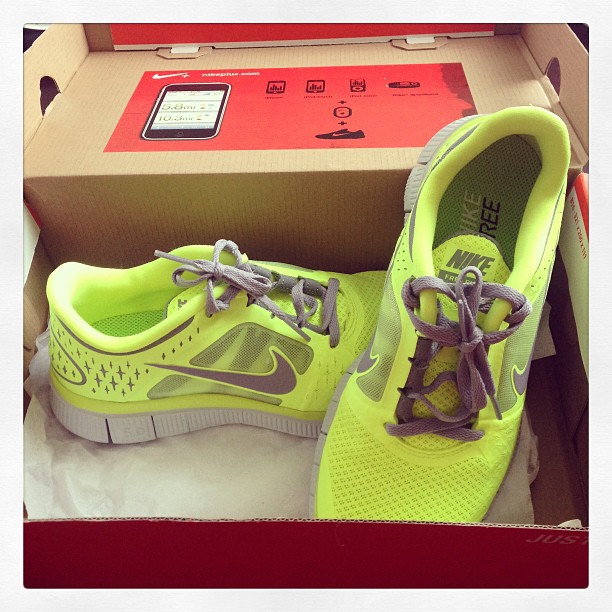
And check out my new shoes!